
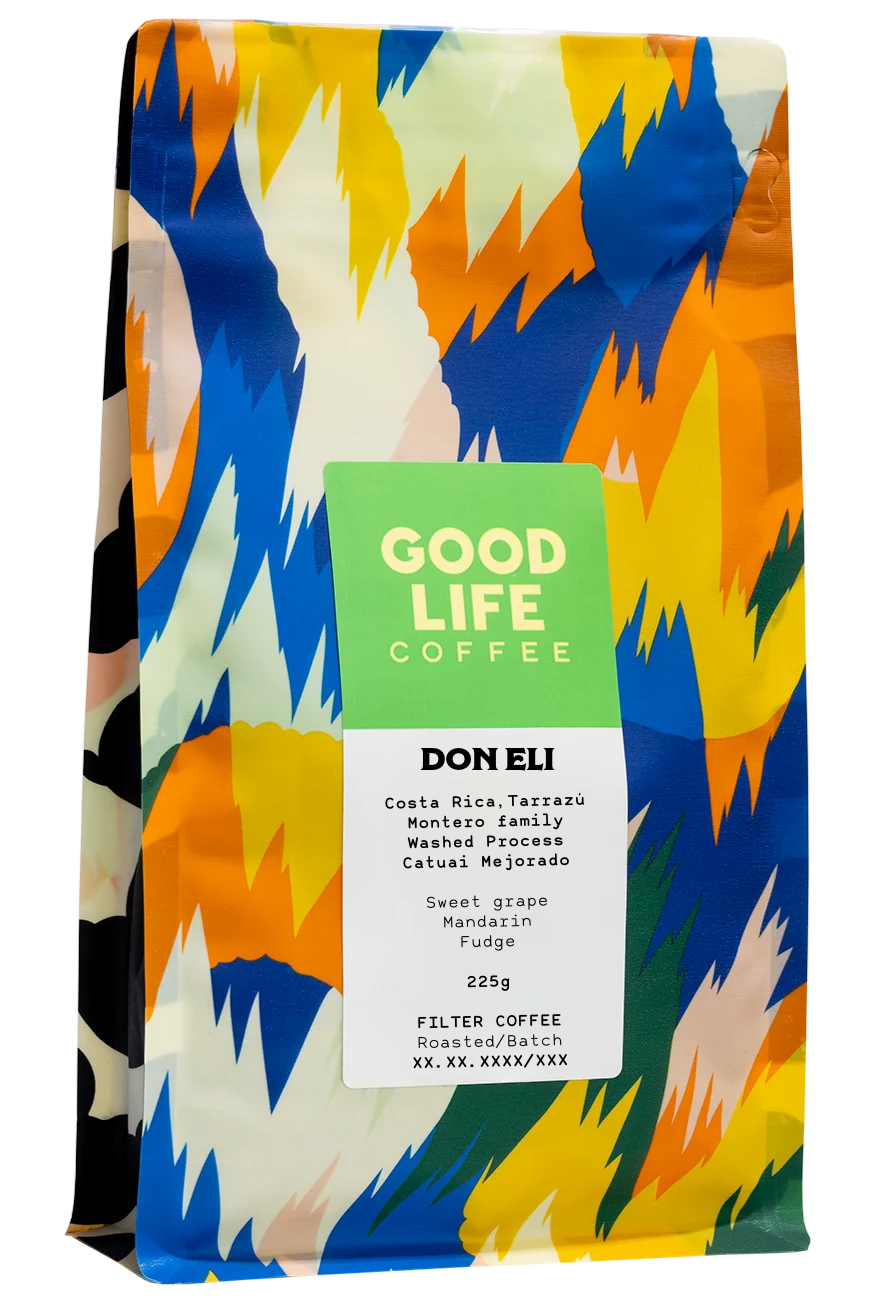
Good Life Coffee
DON ELI, COSTA RICA - FILTER COFFEE
Taste notes: Makea viinirypäle, mandariini ja fudge
Country: Guatemala
Field: Tarrazú, Los Santos
Producer: Ismael Quinteros Orantes
Processing: Washed
Varieties: Catuai
Altitude: 1550-2000 m
Harvest: 2025-2026
FOB price:
This washed Don Eli from the mountains of Tarrazú offers notes of sweet grape, mandarin and fudge-like sweetness. The mouthfeel is juicy and smooth.
The coffee comes from the Montero family, who helped build Tarrazú’s specialty coffee scene and guide the region’s shift from traditional coffee farming toward quality-focused micro mills and direct trade. Carlos Montero founded the Don Eli micro mill in 2014 and named it after his father, Eli. Today, processing is led by Carlos’s son, Jacob Montero, who keeps refining his methods so that the character of each harvest can shine through.
This lot is named Anfiteatro after its terrain and plot. The slope it comes from rises in tiers like the seating of a theatre. It sits high above San Marcos de Tarrazú on the Montero family’s well-known La Pastora farm. Carlos once grew apples there, and the terraces built for them have turned out to be excellent growing spots for coffee trees. That’s why the lot from the other side of the ridge is known as Manzanal, or “apple orchard.” The high altitude and fertile soil provide ideal conditions for quality coffee, although increasingly unpredictable weather has made farming more challenging.
The double washed process, together with the lots from La Pastora, has earned Don Eli its reputation. Jacob pulps the fresh cherries with a Penagos Eco pulper, leaving most of the mucilage on the beans. The coffee then rests in tanks for 48 hours before being washed until the parchment is clean. Finally, it is dried on raised beds and turned daily for 12 days until the moisture content is just right. The team counts the “wash” that takes place during fermentation, which is why they call the process double washed, even though it closely resembles a traditional washed process.