Good Life Coffee
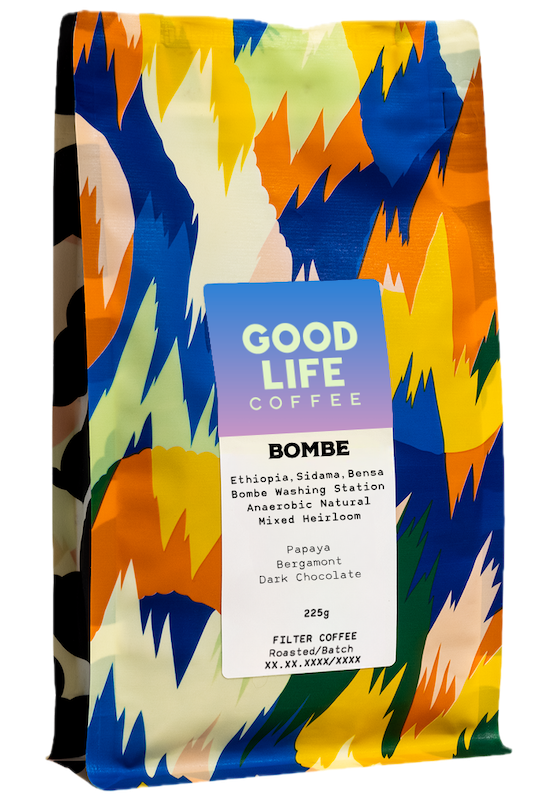
BOMBE ANAEROBIC NATURAL, ETHIOPIA - FILTER COFFEE
Country: Ethiopia
Field: Sidama, Bensa
Producer: Small farmers of the area
Processing: Anaerobic Natural
Varieties: Mixed Heirloom
Altitude: 1900-2400m
Harvest: 2026
FOB price: 16,53 USD/kg
Coffees like this don't show up in the GLC lineup all the time, but right now, one does. A special lot, anaerobically fermented and naturally processed from Ethiopia. Light fermentation combined with the balance and sweetness that natural processing brings makes this one a real treat. Expect notes of papaya, bergamot and dark chocolate.
Bombe is a coffee-growing area in the Bensa district of the Sidama Zone in Ethiopia. Coffee here is grown at elevations between 1,900 and 2,400 meters above sea level, making it one of the highest-altitude production areas in Sidama. The coffee comes from smallholder farmers, each cultivating their own Ethiopian heirloom varieties.
Ethiopian coffee is a special case when it comes to varieties. A single lot often contains dozens of different cultivars — JARC selections, local landraces, and other heirloom varieties growing side by side on the same farms. This diversity is rarely possible to map in detail, and it doesn't need to be: it's precisely what gives Ethiopian coffees their characteristic complexity.
This lot has been processed using an anaerobic natural method. Carefully sorted whole coffee cherries are sealed in oxygen-limited fermentation tanks, where they undergo controlled fermentation. After fermentation, the cherries are moved to raised drying beds, where they dry evenly under natural sunlight. Once the target moisture level is reached, the lot is rested in storage before the final dried cherry skin is removed and the coffee is prepared for export.